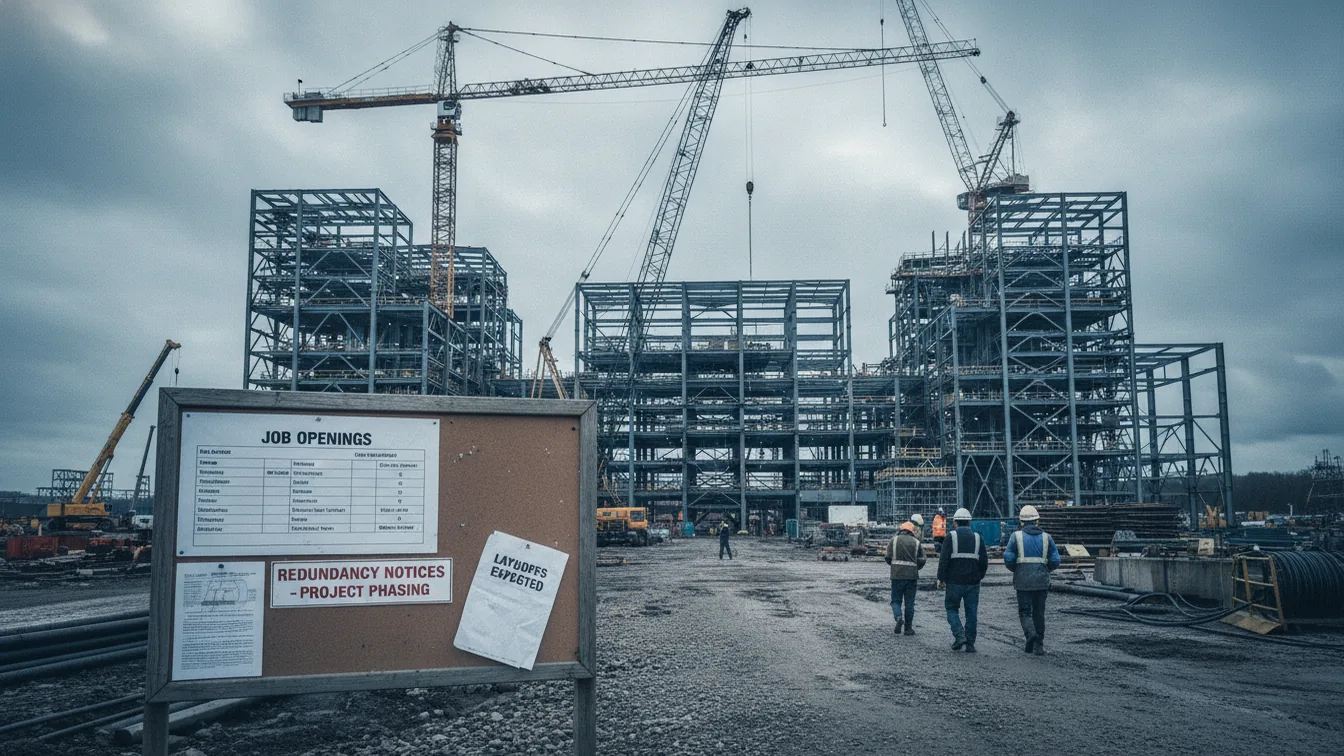
The Chart Everyone Is Missing
Meta laid off 8,000 people. The headlines say: AI is replacing workers. That is the wrong read.
The right read is in this number: $725 billion.
Google, Microsoft, Meta, and Amazon have guided combined capital expenditure of $725 billion for 2026. That is up 77% from 2025. It is more than the GDP of all but approximately 22 countries on Earth.
Meta specifically: $39 billion in 2024, $72 billion in 2025, and $125 to $145 billion guided for 2026. That last number is more than Meta spent on capital expenditure in 2024 and 2025 combined.
What Zuckerberg Actually Said
At a company town hall on April 30th, Zuckerberg said this directly: "We basically have two major cost centers in the company , computer infrastructure and people-oriented things. And if we're investing more in one area, that means we have less capital to allocate to the other."
That is not AI replacing workers. That is a CFO-level allocation decision. The company is moving capital from payroll to data centers. The layoffs are a financial correction, not an automation story.
The pattern is the same at Amazon. Two months before the Meta announcement, the same analysis applied there: Amazon used AI as a cover narrative for layoffs that were driven by a financial correction, not AI efficiencies. The AI framing is useful. It generates headlines, creates a strategic narrative, and avoids the less flattering version , which is that companies over-hired during the pandemic boom and are now normalising.
Where the $725 Billion Is Going
It is going into the physical infrastructure that runs AI: data centers, chips, power, cooling, fibre. The same infrastructure that is showing up in rural Texas as Stargate and generating thermal drone footage of heat pollution.
The downstream effect of $725 billion in infrastructure spending is a cascade of economic activity that does not appear in the layoff headlines. Chips. Construction. Power infrastructure. Grid upgrades. Fibre deployment. Cooling systems. All of this requires human labour and produces employment in categories that the tech company payroll reduction does not capture.
This is not a comfort to the 8,000 people at Meta who received the email at 4 AM. Their specific jobs are gone and the specific skills they were hired for are genuinely at risk from AI displacement.
But the macro story , AI destroying employment at scale , is not what the numbers show. The numbers show capital shifting from payroll to infrastructure, with the infrastructure spending creating downstream demand the media is not covering.
What This Means for Career Decisions
The $725 billion has to land somewhere. It lands in engineering, construction, power, and operations roles that are building and running the infrastructure. It lands in the industries that the improved AI tools enable , businesses that become viable because AI cut their operating costs enough to reach profitability.
The risk is real: roles that involved routine information processing and standard decision-making are under structural pressure. The opportunity is also real: the infrastructure buildout and the productivity unlocking create demand in categories that did not exist three years ago.
Understanding which category your skills sit in is the most important career calculation of the current moment. The layoff headline does not tell you. The $725 billion number, and where it is going, does.