The New IT Governance Problem
Bloomberg reported it. Companies built too many AI agents. Now they must corral them.
The story is more specific than the headline suggests. At some Fortune 500 companies, the number of active AI agents has reached 150,000. Each one is burning tokens. Each one has access to some combination of systems, data, and actions. Most of them were built by individual teams or engineers without a central register of what exists, what each one does, or who is responsible for it.
The Server Room Analogy
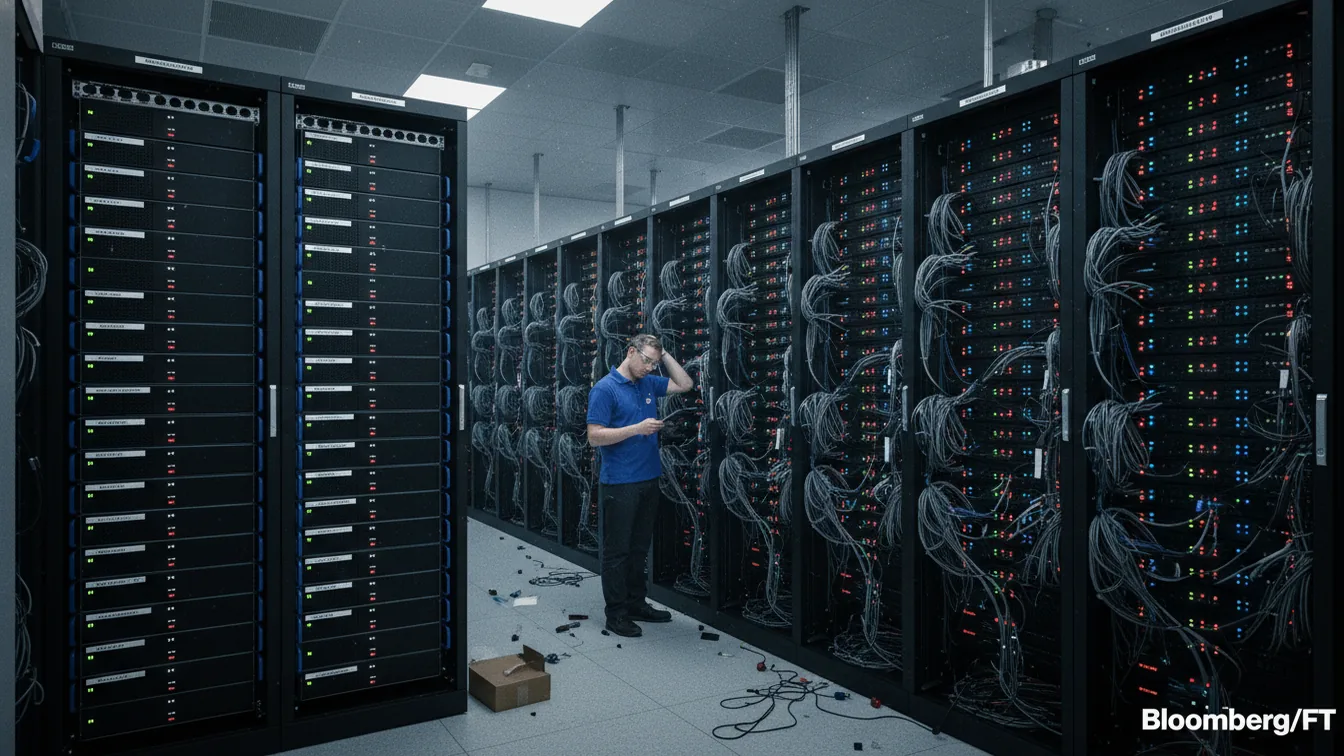
Eli the Computer Guy framed it with an analogy that lands: walking into a legacy server room for a new client. You ask what each box does. Most of them have answers. Then you find a few that are blinking , clearly active, clearly doing something , and nobody can tell you what they do, when they were installed, or who owns them.
That was a manageable problem with physical servers. The number of unknowns was limited by hardware costs and rack space. AI agents have no such ceiling. An engineer can spin up a new agent in an afternoon at effectively zero marginal cost. There is no procurement process, no hardware approval, no physical footprint that creates visibility.
The result: companies that moved fast on AI agent deployment in 2024 and 2025 are now walking into their own server rooms, asking which agents do what, and finding that a significant number of them nobody can definitively answer for.
The Cost That Nobody Budgeted For
Every active agent is burning tokens. Not when a human initiates a task , continuously, if it has cron jobs or triggered workflows. An agent that monitors a database and runs inference on changes every 15 minutes costs tokens every 15 minutes, indefinitely.
At 150,000 agents, that cost is not in any single team's budget. It was not in any central plan. It accumulated as teams built independently without a governance layer that tracked aggregate consumption.
What Comes After Sprawl
The enterprise response to agent sprawl is creating a new category of internal tooling: agent registries, governance dashboards, access management for AI agents analogous to what IAM systems do for human users.
The companies that built this infrastructure before deploying at scale have cleaner organizations. The companies that deployed first and asked questions later are building the governance layer retroactively , harder, slower, and more expensive than building it forward.
The lesson is the same one IT learned from shadow IT in the 2010s: when individuals can create powerful things faster than governance can track them, the governance problem arrives eventually. With AI agents, it arrived faster than most enterprises expected.