Bigger Than Central Park
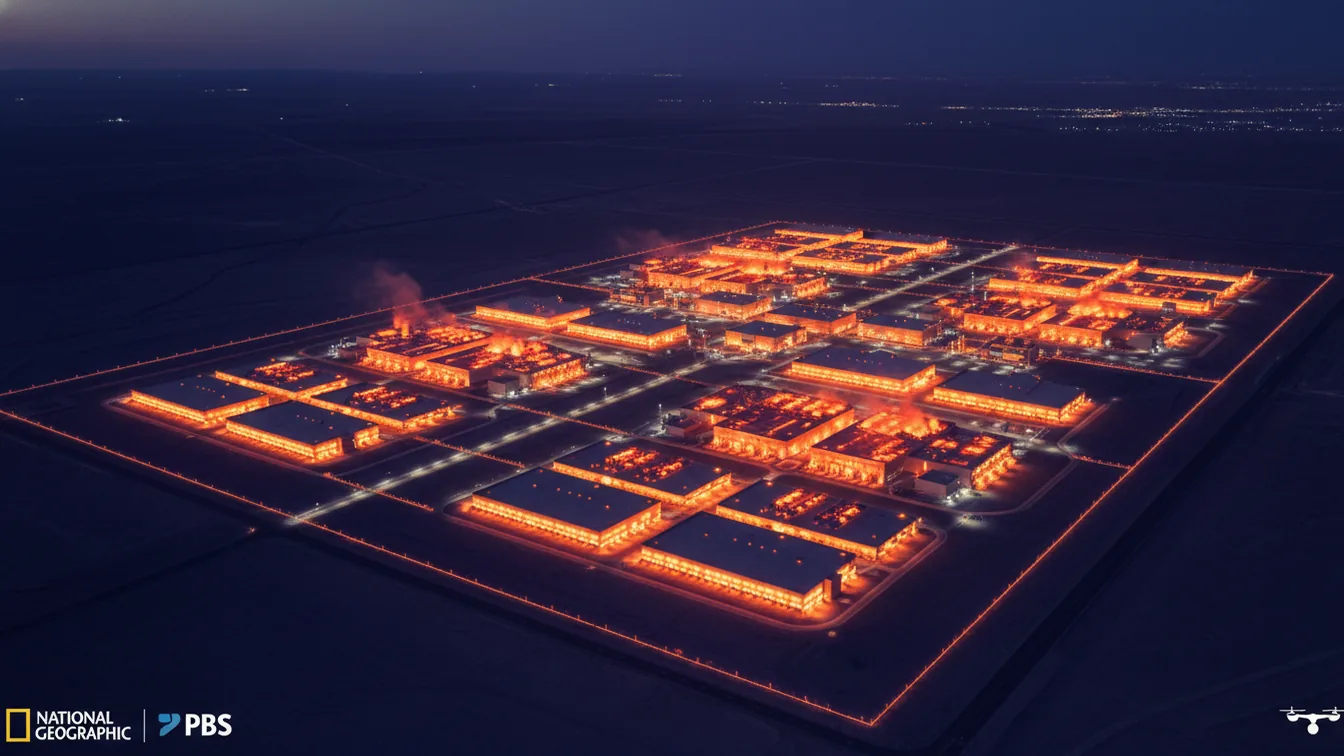
Stargate is one of the largest AI data centers in the world. It is currently under construction in rural Texas: 4 million square feet of buildings across 1,100 acres. For context, Central Park is 843 acres.
From the ground, you cannot tell what is happening inside. From above, with a thermal camera, you can.
The footage shows heat signatures pouring from the facility , visible proof of the energy load required to run a data center at this scale. The communities around Stargate did not choose to be downwind of it. They were not consulted. They are not happy.
$7 Trillion by 2030
By the year 2030, analysts estimate companies will have invested nearly $7 trillion in data center infrastructure , all of it in a race to dominate the AI market. That is not a rounding error. It is a number large enough to reshape the physical landscape of the United States.
The race is happening fast enough that companies are making decisions that would not survive a slower, more scrutinised process. Environmental reviews get accelerated. Permits get expedited. The communities that happen to have cheap land and access to power lines find themselves hosting facilities that consume electricity equivalent to small cities.
What the Thermal Camera Found
The investigation, led by reporter Evan Simon, found AI data centers brazenly defying environmental laws while regulators do little to stop it. The thermal drone footage provided evidence that emissions were happening at sites where the operators had denied any violations.
"When we get a real sense of it from above , this is a massive, massive site."
The specific findings: heat signatures indicating pollution at sites that had denied it. Not ambiguous readings. Clear thermal evidence that communities had been told did not exist.
The pattern across multiple sites: promises of jobs and economic development. Actual output: noise, heat, water consumption, and electricity demand that stresses local grids. The people who live nearest to these facilities have had the least say over whether they go up at all.
The Water Nobody Talks About
Cooling data centers requires enormous amounts of water. In areas that are already water-stressed , which includes large parts of rural Texas , a single large data center can affect the water table for surrounding agricultural land and residential wells.
The communities raising the alarm are not anti-technology. They are people who watched a facility appear near their homes, got assurances about environmental compliance, and now have footage showing those assurances were inaccurate.
"There's really a transparency issue around the AI industry right now. It feels like a really important time to pay close attention to these things."
The Structural Problem
The economics of the AI build-out create pressure to move faster than regulatory frameworks can track. Permitting takes time. Environmental review takes time. Completing a data center before a competitor is a strategic advantage worth billions.
The communities near these sites have limited leverage. The companies building them have significant resources, significant political relationships, and significant urgency. The regulators enforcing compliance have limited capacity and , in several documented cases , limited will.
The $7 trillion being invested in AI infrastructure between now and 2030 has to land somewhere. It is landing in rural communities that were not consulted and are learning, from drone footage, what the industry does not want them to see.