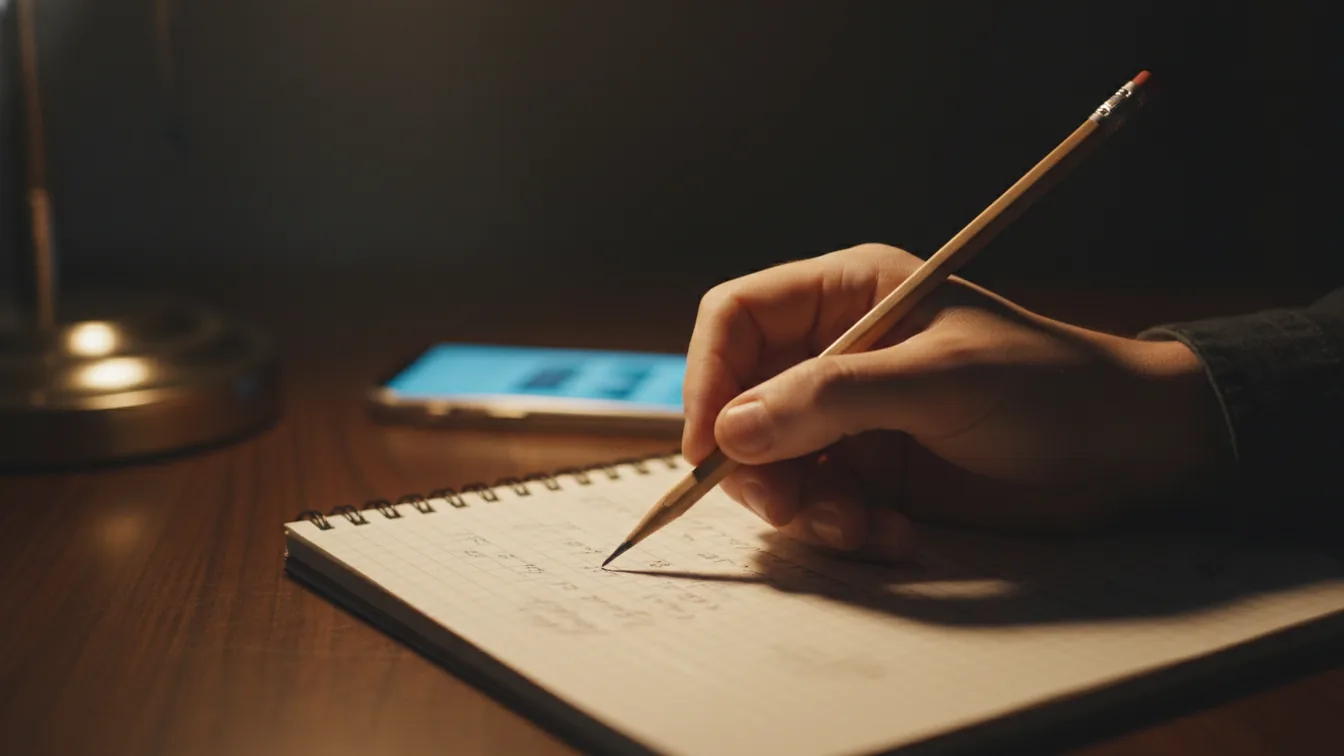
The Post That Landed Differently
r/LifeProTips gets thousands of submissions a week. Most of them are fine. Some of them hit 30,000 upvotes.
This one did: "Don't write something down the moment you think of it. Give yourself 10 minutes to hold it in your head first. The struggle to remember is the thing that makes it stick."
Standard memory science. People have known this for decades. So why did 32,609 people save and share it in May 2026 specifically?
Because they recognised something in themselves. The habit of immediately outsourcing any thought that needed holding. The slight, persistent feeling that their memory was getting worse. The suspicion that they could not sit with a problem for ten minutes anymore without reaching for a phone.
What the Science Actually Says
The effect is called cognitive offloading. It is not new and it is not unique to AI , calculators, GPS, and search engines all enable it.
The research is consistent: when you outsource a cognitive task to a tool, the neural pathway that performs that task gets used less. Used less long enough, it weakens. Not permanently , the brain is plastic and can recover , but measurably, demonstrably.
The critical word is "outsource." Using a tool to augment your thinking is different from using a tool to replace it. Looking up a fact you need once is different from never retaining facts because you always look them up.
The line between augmentation and replacement has moved significantly in the last two years. Most people have not noticed.
Three Skills Worth Defending
Not every cognitive skill is worth fighting for. Some are worth offloading. Nobody loses by letting a calculator do arithmetic.
These three are different:
Recall under pressure. Not the ability to remember trivia , the ability to pull relevant information when you need it fast, in a conversation, in a meeting, without a search bar. This is what people mean when they describe someone as "sharp." It atrophies faster than you expect.
Deep reading. Reading something long and demanding without skimming, multitasking, or jumping ahead. This is the foundation of complex reasoning. Studies show average reading depth has dropped sharply in populations with high smartphone use. The ability to finish a difficult thing is downstream of everything else you think you are good at.
Working memory. Holding an idea, turning it over, considering it from multiple angles , before writing it down, before asking AI, before externalising it anywhere. This is where original thinking happens. Outsource it early and often enough, and it stops feeling natural.
What This Is Not Saying
This is not an argument against using AI. Use it. The tools are genuinely good and the productivity gains are real.
It is an argument for intentionality about which tasks you hand over and which ones you keep. Give AI the things that do not need to live in your head. Keep the ones that do , and exercise them the same way you would a muscle you do not want to lose.
The tip that hit 32,000 upvotes was not a life hack. It was a small act of resistance against the default. Enough people are feeling the default now that a reminder to push back went viral.
That is worth paying attention to.