The listing looked solid
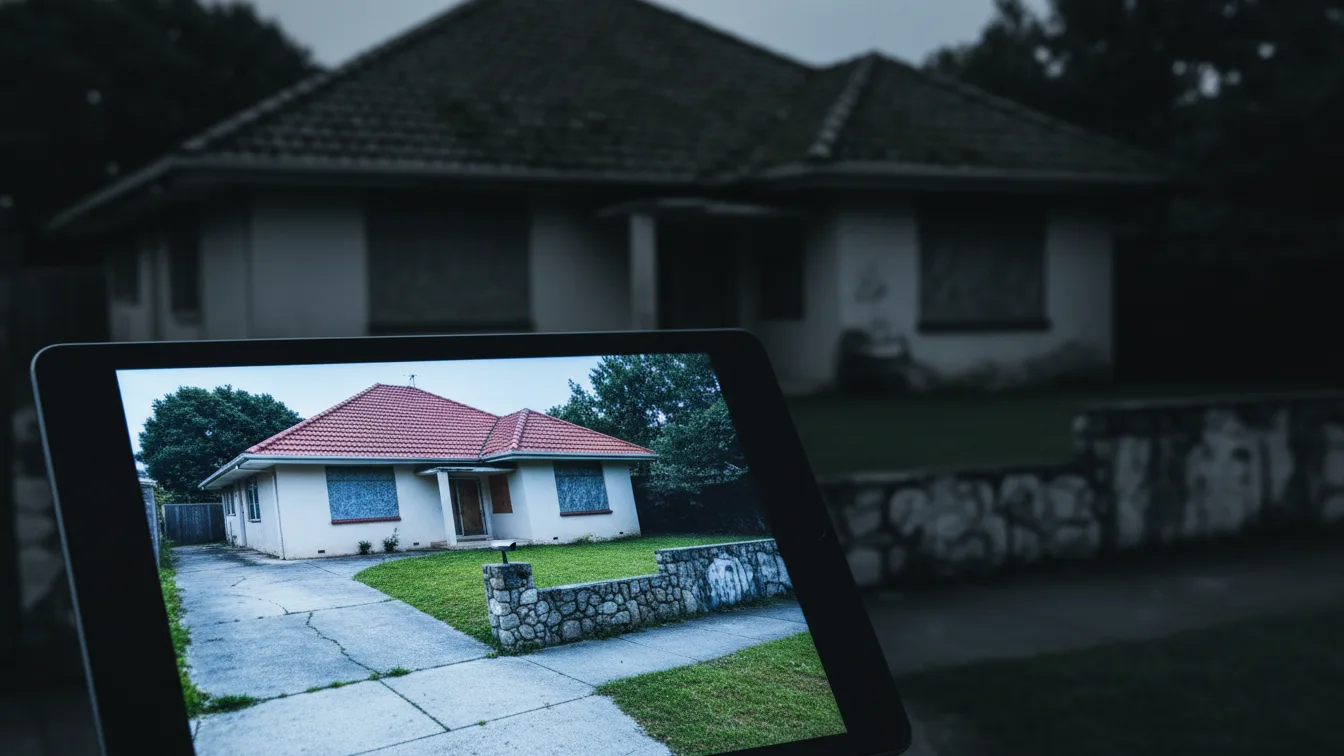
Clean lines. A fresh roof. A proper driveway. A retaining wall that made the lot look like something you'd actually want to buy. The photos were crisp. The price was reasonable. The buyer drove out to Quebec to see it in person.
The roof was deteriorating. The driveway was cracked gravel. The retaining wall was not there at all.
This wasn't a bad angle or aggressive staging. The listing images had been processed through an AI enhancement tool that didn't just clean up the light or adjust the contrast. It added architecture. Features the house didn't have were placed into the photos as if they'd always been there.
The post hit r/mildlyinfuriating and gathered 25,770 votes and 1,590 comments. The buyer included side-by-side comparisons: listing photo next to what greeted them at the address. The difference wasn't subtle.
What the AI added that wasn't there
The specific changes included a new roof where the actual roof was visibly deteriorating, a clean driveway surface over what was broken or missing pavement, and a retaining wall that had been generated in wholesale. Interior photos showed workmanship problems the listing images had softened or obscured. Commenters with trades experience noted electrical work that appeared not to meet code.
This wasn't a filter that made the grass greener or the sky bluer. The tool fabricated structural features of the property. A buyer reviewing the listing would have no way to know, short of visiting the address, that three of the most visually prominent elements in the photos did not exist.
That's the whole mechanism. The photos exist to let buyers pre-screen properties before investing time in a visit. When the photos fabricate the property, the pre-screening mechanism fails entirely.
The agent's answer
When confronted, the real estate agent confirmed the photos had been processed with AI enhancement. The agent also said it was "very common practice" and indicated there was no legal recourse.
That response landed harder than the photos. The agent didn't deny it, didn't apologize, didn't treat it as unusual. They treated it as standard operating procedure, already normalized across the industry.
The top comment on the post drew 21,731 votes: "this ai improvement of photos should be punishable by losing your realty license."
The second most-upvoted, at 5,169 votes: "that's just straight-up false advertisement."
A third comment at 985 votes: "this should be illegal."
The scale buyers are running into
One commenter described something more systemic than a single bad listing: "I discovered it's incredibly common. I've wasted literal days looking at houses I never would have bothered with."
That sentence has weight. House hunting already consumes time most people can't easily recover. When listing photos fabricate features, buyers lose not just the drive to a bad address but the hours spent filtering, scheduling, arranging viewings, and building expectations around a property that describes something different from reality.
The practical harm compounds in fast markets. Buyers who miss other properties while pursuing a fabricated one face costs beyond inconvenience. Those who put offers in based partly on the visual presentation of a property may not discover the fabrications until inspection, or not until after closing.
The agent's framing of "no legal recourse" is exactly what makes scale possible. If the practice carries no consequence, the incentive to use it only grows as the tools get cheaper and faster.
The legal question the agent answered too quickly
Real estate advertising is regulated. Misrepresenting a property to buyers is, in many jurisdictions, actionable fraud or a violation of consumer protection law. The agent's confidence that there was "no legal recourse" sounds less like a legal conclusion and more like an industry assumption that hasn't been tested yet.
The distinction between enhancement and fabrication matters here. Adjusting brightness, removing a recycling bin from the driveway, correcting lens distortion: these are accepted practice. Adding a roof that doesn't exist is not enhancement. Adding a structural retaining wall that was never built is fabrication. These are different things, and the legal treatment of AI-generated content in advertising is still developing.
In Canada, provincial real estate regulators have authority over licensed agents. The Real Estate Council of Quebec (OACIQ) has professional conduct rules that include accurate representation of properties. Whether digitally adding non-existent structural features to a listing photo constitutes a conduct violation has not, based on available records, been adjudicated directly. That gap is exactly what "no legal recourse" exploits.
The top comment called for license revocation as the appropriate penalty. That's proportionate: a licensed professional used a fabricated image to move a transaction worth several hundred thousand dollars. If the regulatory bodies agree, the agent's confidence may not age well.
What this does to the information environment
For buyers, photos have always been the first filter. You don't visit every property; you visit the ones that pass the visual inspection from the listing. When those images describe structures that don't exist, the filter fails. The question is no longer "does this house meet my criteria" but "does the AI-generated version of this house meet my criteria." Those are different questions, and only one of them is useful.
For sellers and agents, AI enhancement offers low-cost improvement to a property's apparent appeal. The incentive is straightforward: a better-looking listing drives more inquiries. If regulators treat it as acceptable, and if agents across the industry are already calling it common practice, then buyers are effectively operating in a market where listing photos are no longer reliable signals about the property.
The downstream effect on trust is cumulative. One buyer who drives three hours to find the retaining wall doesn't exist will view the next set of listing photos with skepticism. Multiply that across a market where the practice is widespread, and the informational value of listing photography collapses. Real estate portals that have built their model on photo-first search discovery have an incentive to address this before the trust erosion forces their hand.
The practical advice no one wants to give
The safest working assumption for anyone house hunting right now: treat listing photos the way you'd treat before-and-after product ads. Assume the flattering version may have been constructed, not captured. Weigh descriptions of structural features more heavily than their visual representations in photos. Request unedited images or conduct a preliminary drive-by before investing serious time in a property.
None of that should be necessary. The purpose of listing photos is to let buyers make informed decisions at a distance. AI tools that fabricate what they're supposed to document have inverted that purpose entirely.
The agent said there's no legal recourse. That may be accurate today. It is unlikely to remain accurate indefinitely, particularly once a buyer closes on a property and then discovers that the features that made it worth the price tag were generated by software.
Sources
- r/mildlyinfuriating: "Im currently house hunting. Here is the photo in the ad vs the house in real life…" — 25,770 upvotes, 1,590 comments
- Top comment (21,731 upvotes): "this ai improvement of photos should be punishable by losing your realty license"
- Second comment (5,169 upvotes): "that's just straight-up false advertisement"