The Pattern You Can't Unsee
There is a sentence structure that AI loves. Once you know it, you will see it everywhere.
"It's not A. It's B."
As in: "It's not about hard work. It's about working smart." Or: "It's not about what you know. It's about who you know." The contrast is clean. The rhythm is satisfying. It sounds like an insight.
It is almost always generated by a language model.
A mathematician with a YouTube channel spotted this pattern spreading through math education channels and posted about it. The video hit 114,000 views. Because once you see it, you cannot stop seeing it , not just in YouTube thumbnails but in LinkedIn posts, in news summaries, in emails that land in your inbox claiming to be from a real person.
What Is Actually Happening on YouTube
Channels that post math content every other day. Not a team , a single channel, one or two videos per week, sometimes more. Any human who has made educational video content knows this is impossible at quality. The scripting alone takes days. The research takes more.
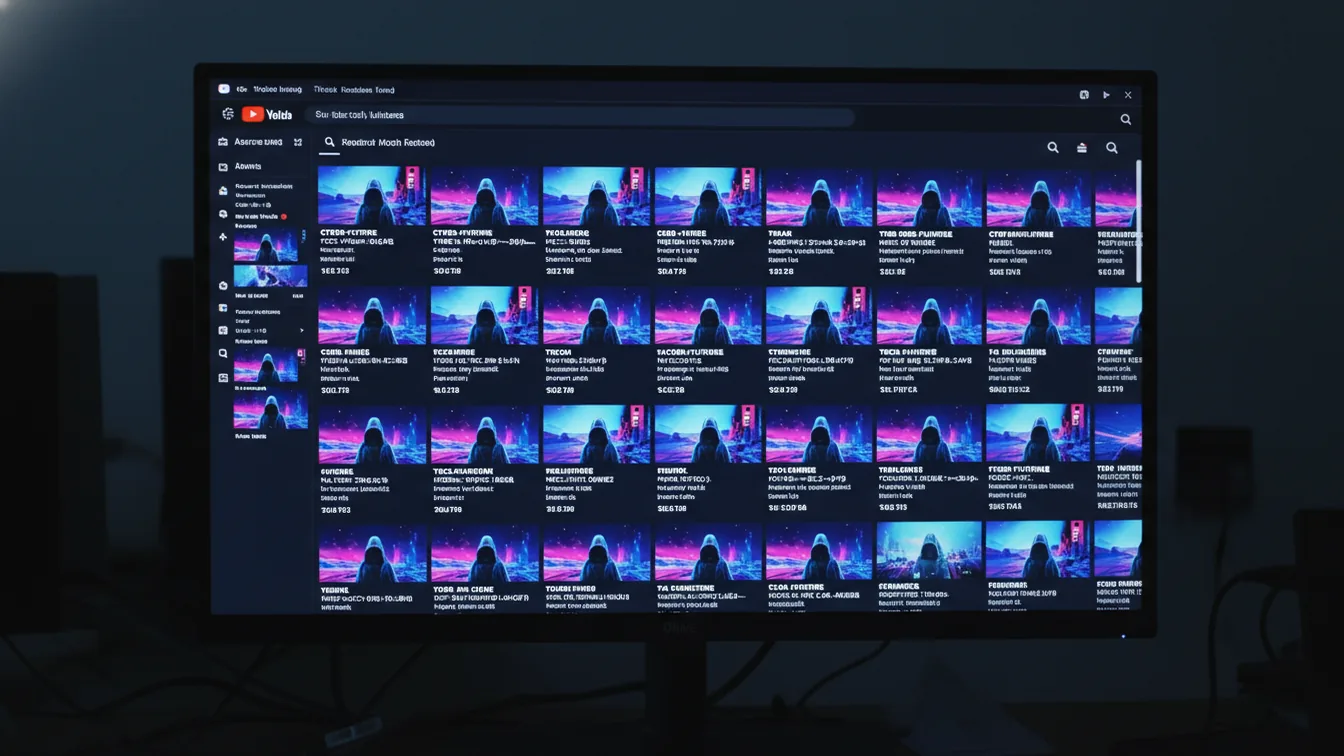
These channels are not made by humans. The thumbnails are generic AI images that have nothing to do with the title. The outlines in the videos are word salads that don't cohere into anything teachable. The narration sometimes mispronounces "polynomial" as "polynemal" because the text-to-speech model doesn't know what the word sounds like , only what the letters are.
The content is wrong. Not subtly wrong. Demonstrably, checkably wrong. And it is getting views because it surfaces in search results alongside real educational content, and many viewers cannot tell the difference until they try to apply what they learned.
YouTube's Response, Such As It Is
YouTube removed 4.7 billion views worth of AI-generated slop in 2025 alone. They are "reducing the spread of low-quality repetitive content," according to their own guidelines.
At the same time, YouTube is actively pushing Veo , their AI video generation tool. More than 1 million channels had used it by December 2025. The platform is simultaneously fighting AI slop and building the infrastructure that produces AI slop.
Creators are now required to declare when they've used synthetic footage. The declaration system is an honor system. You click "no." Nothing verifies it.
The Line Keeps Moving
The mathematician who posted the original video made a point that landed harder than the sentence structure one: creators are drawing the line lower and lower.
First it was: AI can help with titles. Then: AI can generate thumbnails. Then: AI can draft an outline. Then: AI can write the script. Each step feels incremental. Each step is normalized by watching other creators take it. The efficiency gains are real and visible. The erosion of the actual creative act is slow and invisible until it is complete.
The person who said "I make math videos because I love math and I have things to say about it" and the person who said "I make math videos because an AI generates topics that get views" are making content that looks identical from outside. Until a viewer tries to understand something from the second one and finds there is nothing there.
The tells are still visible. "It's not A, it's B." The rule of threes , numerous, abundant, plentiful. The perfect grammar that never pauses. The thumbnail that has nothing to do with the title. Look for them and you will find them. Not just on YouTube.