The Race the US Is Winning and the One It Might Not Be
The US strategy for AI dominance has been clear since 2022: control the chips. Restrict exports. Protect the hardware lead. The logic is straightforward , if China cannot get the most advanced semiconductors, China cannot train the most advanced models.
The strategy is working. There is a real chip gap, and export controls have slowed China's access to the hardware needed to close it.
But there is a second race that nobody is talking about as loudly. And in that race, the US may be falling behind.
What AI Actually Runs On
Running a large language model requires electricity. A lot of it. A single AI query uses roughly ten times the electricity of a standard web search. Data centers are now consuming between 620 and 1,000 terawatt-hours of electricity globally this year , a number that could double again within five years if AI deployment continues at its current pace.
By 2022, data center electricity consumption was already equivalent to all of Germany. The AI boom is pushing that number significantly higher, and the infrastructure to supply that electricity , power generation, grid capacity, transmission lines , takes a decade to build.
Hank Paulson, the former Treasury Secretary who spent thirty years doing business in China, put it plainly: "We have one big advantage on China, and that's it. We're energy independent. And they aren't. But we have a shortage of electricity in this country. The demand is much greater."
Energy independent but electricity-constrained. That is the specific American paradox right now.
What China Is Building
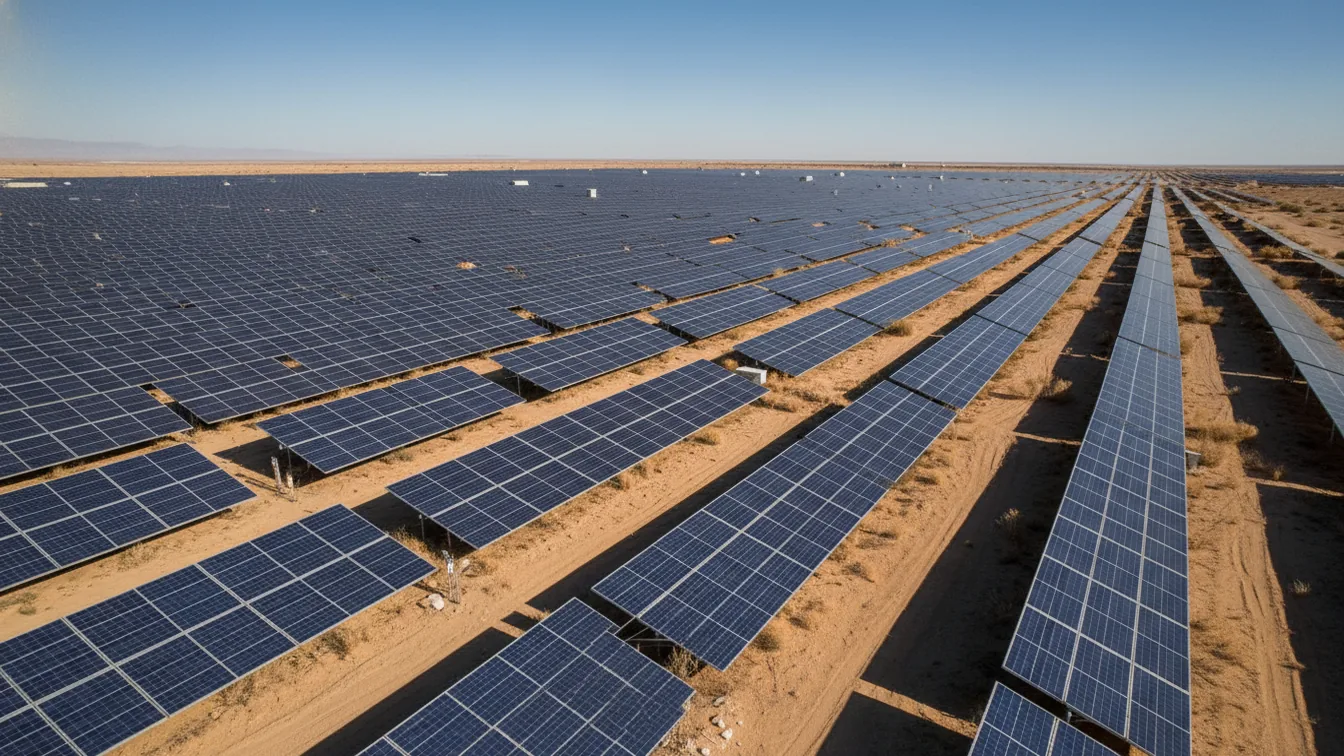
China invested roughly $1 trillion in clean energy in 2024 alone. Solar, wind, nuclear, battery storage , all of it. They are not building this because they care more about climate change. They are building it because they understand that the AI race is an energy race, and they are planning ten years out.
China's clean energy exports were worth $76 billion last year. Their manufacturing capacity for solar panels, wind turbines, and batteries is not matched anywhere in the world. When you need to build data center infrastructure at national scale, the country that can supply the generation equipment cheapest and fastest has a structural advantage.
The US had a plan to close that gap. The Inflation Reduction Act attracted enormous foreign investment into clean energy , a genuine attempt to reboot American manufacturing capacity in the sector. The Trump administration rolled back roughly 95% of it.
Why This Matters More Than the Chip War
Chips are a constraint that can be solved with money and time. TSMC can build new fabs. Nvidia can design new architectures. Intel, AMD, and a wave of domestic chip startups are all working on the compute supply problem.
Energy infrastructure is slower. You cannot permit, finance, and build a nuclear plant or a major transmission line in the time it takes to tape out a chip. The lead times are measured in decades, not years. The bottleneck shifts from what you can design to what the grid can actually supply.
Multiple US states are already turning away new data center projects because the utilities cannot supply the power. Microsoft and Google are both exploring nuclear deals not because nuclear is the cheapest option but because there is no other source large enough.
The chip war is the visible competition. The energy infrastructure race is the one with longer consequences , and right now, one side is building at national scale while the other is arguing about whether to subsidise solar panels.