What Actually Happened
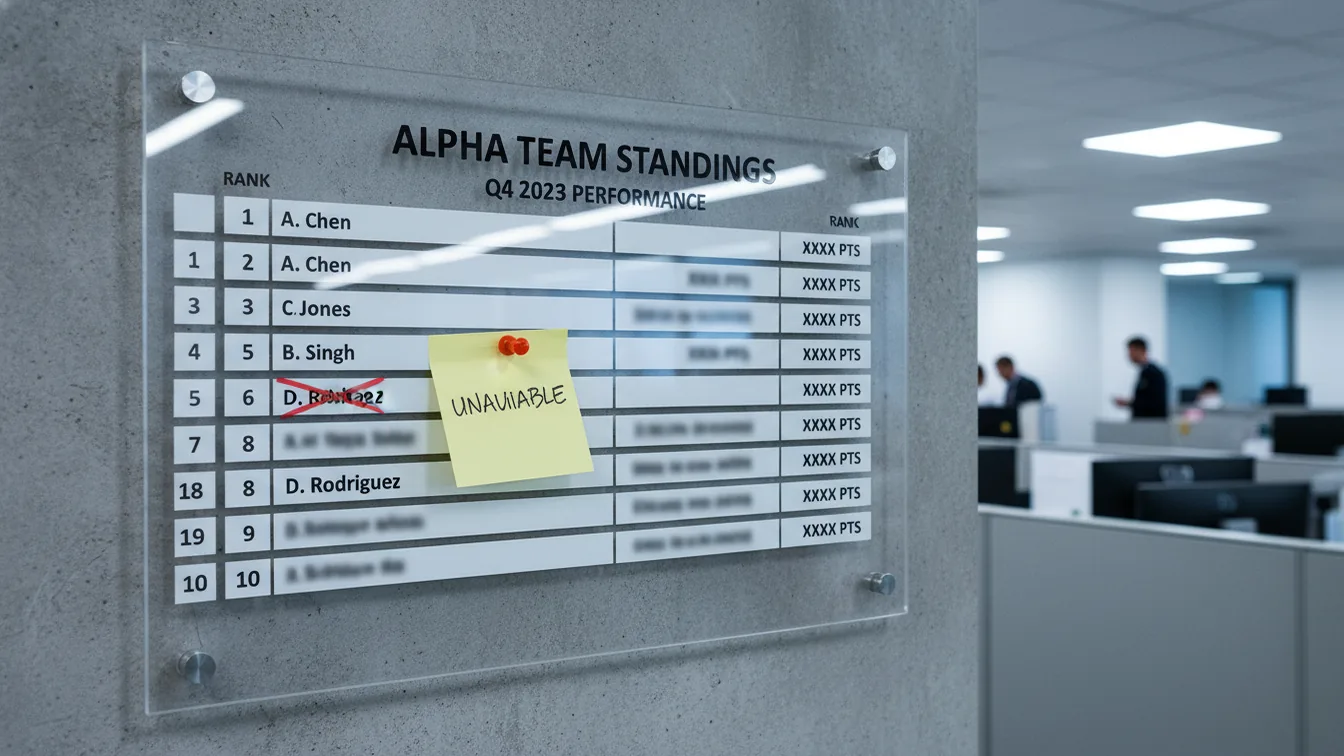
A company that tracks employee productivity added its AI automation system to the same leaderboard that ranks human employees. The AI was listed by name. Assigned a productivity score. Ranked in the middle of the team.
Some human employees were ranked below it.
The official framing: transparency. Showing the team the full picture of output across human and automated contributors. The community reaction, at 98% upvote ratio: this is strange, slightly dehumanizing, and worth discussing.
Both reactions are correct. Let's take both seriously.
What the Company Was Actually Communicating
Putting an AI on a performance leaderboard alongside human employees is a message. The message is not about transparency. The message is: this system produces output we measure and value, and we are measuring your output against it.
Whether that comparison is fair depends entirely on what is being measured. If the metric is tickets processed per day, and the AI processes tickets faster than humans, then the AI scores higher by definition. That is not a meaningful comparison of contribution. It is a meaningful comparison of ticket throughput, which is a proxy for contribution, not the thing itself.
The companies that are going to do this well are the ones that update what they measure before they update what they automate. Measuring humans against AI on output volume without adjusting the metric for what humans are actually for , judgment, exception handling, relationship work , is how you end up publicly ranking employees below a script that processes forms.
The Question It Forces
What, specifically, is a human employee for in a world where AI handles routine output?
This is not a rhetorical question. Companies that can answer it specifically , not "creativity and collaboration" but the specific workflows and decisions that require human judgment , are the ones that will build useful leaderboards and useful organizations.
Companies that cannot answer it are the ones that will put an AI on the wall next to their employees and call it transparency, because they do not yet know what else to say.