There is a post on Reddit. It has 4,101 upvotes and sits at the top of a thread about AI automation. It reads simply: “The dead internet theory was never a theory.”
No argument. No evidence. No elaboration. Just that sentence, and four thousand people agreeing with it.
The thread started as a discussion about Manus AI — a Chinese autonomous agent that launched in March 2025, went viral almost immediately, and was acquired by Meta in December 2025 for approximately $2–3 billion. The specific catalyst was a recirculated demo clip showing one of Manus’s touted capabilities: managing 50 social media accounts simultaneously, 24 hours a day, posting unique content to each one, engaging with replies, and adapting messaging in real time based on what was gaining traction.
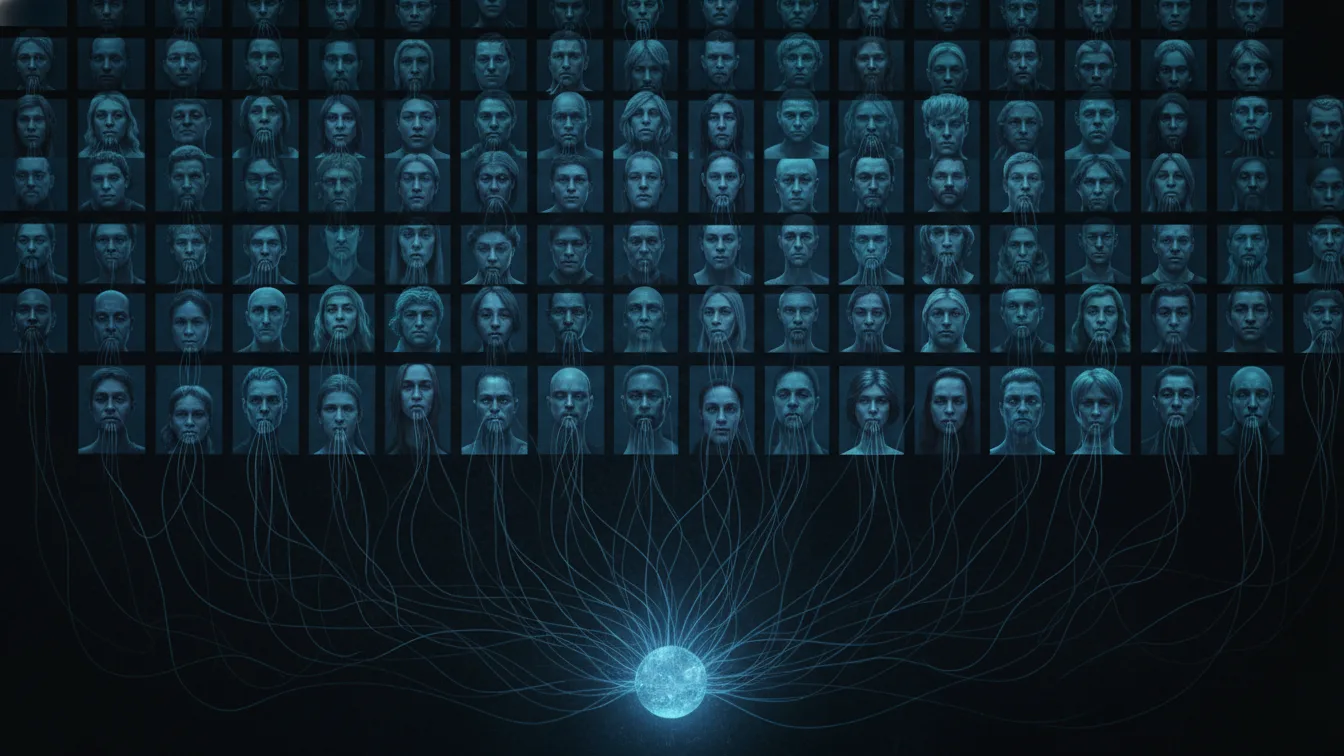
Fifty accounts. Parallel. Nonstop. From a single interface. With no human watching.
The thread did not go viral because of Manus specifically. It went viral because of what the demo represented. A threshold crossed quietly, in a product launch, while most people were arguing about something else.
What Manus Actually Is
Manus was developed by the Chinese startup Butterfly Effect, originally based in Beijing and later relocated to Singapore. The name comes from the Latin “Mens et Manus” — mind and hand, also the motto of MIT — and the intent was deliberate: this is not a tool that thinks and then asks you to act. It thinks and acts.
The architecture is a three-agent loop. A Planning Agent breaks down a high-level goal into discrete steps. An Execution Agent carries out each step using a sandboxed browser, code environment, and access to 29 external tools. A Verification Agent checks results, flags errors, and loops back if something is wrong. The user provides the goal. The system handles everything else.
In practice, that means Manus can screen 20 job candidates by browsing their websites and comparing credentials. It can build and deploy a website from a single instruction. It can analyze a stock portfolio, generate charts, and publish a dashboard. It operates asynchronously — you assign the task, close your laptop, and return to find the work done. The cloud environment keeps running whether or not you are watching.
Social media management was listed among its core use cases from day one. The specific capability that circulated in the demo — running 50+ accounts in parallel, each with its own browser session, spoofed fingerprints, proxy rotation, and unique content generation — was framed as a feature for legitimate marketing operations. And it probably is, for most users. That is not quite the point.
The Conspiracy That Became Tuesday
The Dead Internet Theory started, as many things do, on 4chan. The claim, around 2021, was conspiratorial and paranoid: that the U.S. government had been secretly replacing real human activity online with bots and AI-generated content, creating an artificial simulation of discourse. Most researchers dismissed it as pattern-matching paranoia. The evidence was thin, the mechanisms implausible, the conclusion unfalsifiable.
But underneath the conspiracy theory was a real observation: the internet felt different. Less alive. More repetitive. Harder to tell where content was actually coming from.
By 2023, academics began engaging with the observation without the conspiracy. An arXiv preprint in early 2025 formally surveyed the evidence under the title “The Dead Internet Theory: A Survey on Artificial Interactions and the Future of Social Media.” The abstract read: “Much of today’s internet, particularly social media, is dominated by non-human activity, AI-generated content, and corporate agendas, leading to a decline in authentic human interaction.” That is not a conspiracy theory. That is a literature review.
In January 2025, Meta’s vice-president of product for generative AI announced that Meta planned to introduce AI-powered autonomous accounts that would “exist on our platforms in the same way that accounts do… with bios and profile pictures and the ability to generate and share content.” The accounts were briefly piloted and then quietly removed.
In September 2025, Sam Altman posted about the theory on X. Alexis Ohanian, Reddit’s co-founder, said he had “long subscribed” to the dead internet theory. In January 2026, Ohanian and Kevin Rose relaunched Digg in open beta. Two months later it shut down due to “an unprecedented bot problem.” It has since relaunched again as an AI news aggregator, explicitly because of the same bot problem that shut it down.
This is not a conspiracy anymore. This is a product changelog.
Synthetic Consensus
USC’s Information Sciences Institute published a paper accepted at The Web Conference 2026 that named the core threat: “synthetic consensus.”
The mechanism is simple. Humans form opinions partly through social proof — we look at what other people appear to believe and use it to calibrate what is plausible. If thousands of people seem to hold a view, we treat that view as mainstream even if we have not evaluated the underlying evidence ourselves. This is not a bug in human cognition. It is a feature. It is how communities converge on shared norms at scale.
AI agents exploit it structurally. A coordinated network of 50 autonomous accounts — each with a distinct posting history, a plausible profile, a consistent tone of voice, and months of synthetic activity — can make a fringe position appear mainstream. The accounts do not need to lie. They just need to be numerous and coordinated. The appearance of independent agreement is the product. The content is almost secondary.
Russia’s Internet Research Agency operation in 2016 — the reference point most people have for coordinated social media manipulation — had humans working in shifts, manually posting content. Researchers later concluded it had reached roughly 70% of American voters, but through sheer labor. Today’s AI swarms are categorically different. They can generate contextually appropriate, unique text for every post, maintain consistent character personas across months, and adapt messaging in real time based on which narratives are gaining traction. The USC paper concluded that the machinery of disinformation can now run itself.
This is not what most people picture when they hear “AI”. They picture a chatbot that sometimes gets facts wrong. What is actually being deployed, commercially, today, is something more like an autonomous influence operation that anyone with a laptop can rent.
The Irony in the Launch
Here is where it gets uncomfortable.
While Manus was being promoted as a tool for legitimate social media automation, a Verge investigation discovered that Manus itself had been running a paid creator network to market the product. Across TikTok and Instagram, dozens of accounts were posting near-identical content. Same language. Same format. Same promises: make $5,000 a month in under 10 minutes a day using Manus. Most accounts were only a few months old. Most had only ever posted about Manus. Disclosure? Largely absent.
Manus confirmed it worked with “third-party agency partners on paid UGC creator programs.” A LinkedIn profile from a Manus hire described the role: lead a team of 10–20 creators, enforce brand guidelines, coach on going viral, guide on “persona-specific content.” Many of the posts disappeared after The Verge reported on them. Some didn’t.
An AI company marketing its AI-driven social media automation tool through a network of AI-scripted human accounts. The recursive quality of this should not be lost on anyone.
What Platforms Are Actually Doing
On March 11, 2026, Hacker News updated its community guidelines. The change was blunt: no AI-generated comments. Not “disclose your use.” Not “keep it minimal.” A categorical ban. The stated reason: “HN is for conversation between humans.”
The same day, Adrian Krebs published a blog post that trended at number two on HN within hours. It was not a manifesto. It was a list. An AI-generated job application that looked human until it didn’t. Reddit threads where bots astroturf SaaS products, posting hundreds of near-identical comments while hiding their history. LinkedIn timelines buried under AI-polished professional takes. Open-source maintainers receiving nonsensical pull requests from autonomous bots — and in some cases, those PRs being reviewed by other bots, a closed loop that burns maintainer attention without producing anything.
Krebs ended his post asking whether a human-dominated internet was still recoverable. His answer: probably not.
The moderation problem is structurally asymmetric. Producing AI comments is free. Detecting them is hard. And the moment any community successfully excludes AI content, it becomes one of the most valuable remaining sources of genuine human discourse — which makes it an even more attractive target to train on. The incentive to flood it never goes away.
Traditional detection searched for copy-pasted content. That no longer works when AI generates unique text for every post. The new detection approach, according to the USC researchers, must focus on network behavior: statistically improbable coordination patterns, synchronized narrative propagation, anomalous engagement velocity. Not individual posts. Entire behavioral fingerprints of synthetic account networks.
That is a much harder problem. And the defenses are running behind.
What This Means for You
Need to Know: The commercially available version of this capability — not a research paper, not a future warning, but a product you can download today — can operate 50 social media identities simultaneously, each with its own anti-detection fingerprint, each generating unique content, each engaging with replies, each adapting based on what works. This is not a sophisticated state-sponsored operation. This is a startup’s marketing feature. The capability class is now in general distribution.
Taiwan, India, Indonesia, and the United States all encountered AI-generated deepfakes and fabricated news outlets during their 2024 election campaigns. The 2026 and 2028 cycles are the ones researchers say the window for building defenses is closing on. Every major social platform and every national election is now operating with threat models that the regulatory and detection infrastructure was not built to handle.
Profit From: There is a flip side that nobody says out loud. If AI-driven content floods every platform, the scarcest resource online becomes verified human credibility. Communities that enforce explicit norms, invest in moderation, and accept the friction cost of doing so will become increasingly valuable precisely because of their rarity. This is already visible on Hacker News, on small Discord communities with strict human-only policies, and in newsletters where the author’s direct voice is unmistakably personal. Being legibly human is becoming a strategic asset. If you are building a brand, a platform, or an audience, the “this is a real person who actually thought this” signal is not just nice to have. In a dead internet, it is the whole product.
Share to the World: The original dead internet conspiracy theory was wrong about the mechanism and the culprit. It was right about the outcome. The internet is filling with non-human content, not because of a government program, but because of economics. AI-generated content is cheap to produce and increasingly indistinguishable from human output at scale. The incentive to flood platforms with it is structural. Nobody is directing it. Nobody needs to. The market is doing it on its own.
The question is not whether this is happening. It is. The question is what happens to the places that still have authentic human discourse, and whether they can hold that line long enough for something better to emerge.
That Reddit comment with four thousand upvotes — “The dead internet theory was never a theory” — might itself be one of the last things you read that you can be confident came from a real person who actually believed it.
Or it might not.
Sources: Manus AI launch (Butterfly Effect / Monica.im, March 2025); Meta acquisition of Manus (December 2025, reported $2–3B); arXiv:2502.00007 “The Dead Internet Theory: A Survey on Artificial Interactions and the Future of Social Media”; USC Information Sciences Institute / The Web Conference 2026 paper on AI-coordinated propaganda; The Verge investigation into Manus influencer campaign (Robert Hart, April 2026); Adrian Krebs “The dead internet is not a theory anymore” (March 2026); Hacker News guidelines update banning AI-generated comments (March 11, 2026); Wikipedia “Dead Internet theory” (updated 2026); Digg relaunch and shutdown (January–March 2026).