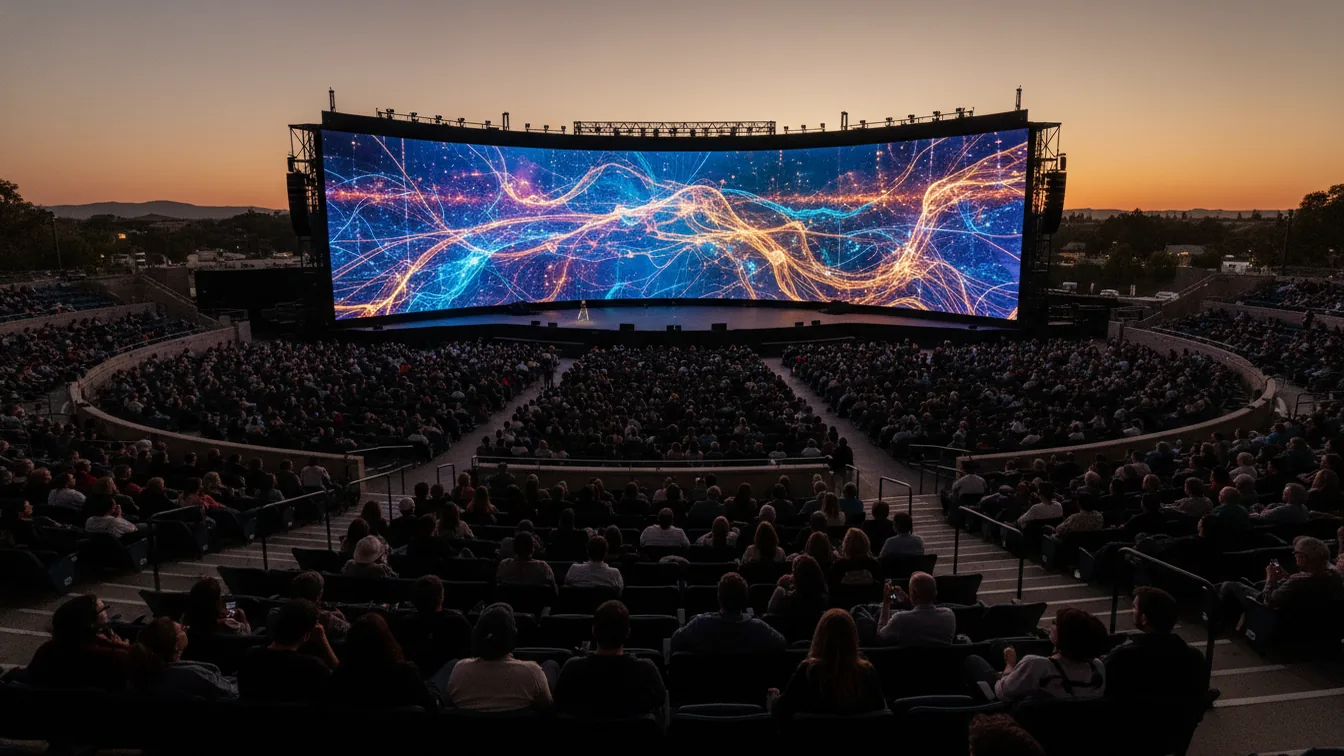
The Number That Sets the Scene
A year ago, Google was processing 9.7 trillion tokens a month across its AI surfaces. At this year's I/O, Sundar Pichai opened with an update on that number.
It had jumped seven times. To 3.2 quadrillion tokens per month.
That is the volume at which people are actually using Google's AI products right now , not the volume of what was announced, but what is running in production. 13 products now have over a billion users. Five of those have more than three billion users. Gemini is running at a scale that makes everything else look like a pilot.
Antigravity: What It Actually Did on Stage
The headline demo of the keynote was Antigravity , Google's agentic coding system. On stage, it was asked to build a functioning operating system from scratch.
Working in parallel, it made over 15,000 model requests, processed 2.6 billion tokens, and took an initially empty project to the core of a working OS. The final test: run Doom. It worked.
What made this possible is what Google called "sub-agent teamwork" , multiple specialized agents running simultaneously and coordinating. Not a single agent working sequentially, but a fleet working in parallel on different parts of the same problem. Google says Gemini 3.5 Flash is now 12 times faster than before, which is what makes parallel agent work at that scale practical.
Gemini Spark: The Always-On Personal Agent
The announcement that most people missed inside the keynote: Gemini Spark. A personal AI agent that runs on a dedicated virtual instance, monitors your digital life, and takes action proactively on your behalf.
Concretely: you set conditions , a flight from San Francisco to Delhi drops below $1,000, a product comes back in stock, a competitor publishes something relevant , and Spark monitors those conditions continuously from the cloud. Not on-device. Not when you open the app. Always running.
Google described these as "cron jobs for real life." The comparison to developer infrastructure is intentional. What was previously a technical pattern restricted to engineering workflows is now a consumer feature in the Gemini app.
What the Announcements Mean for Everyone Else
The AI industry read this keynote as a threat. "Google just killed half the AI industry" is a phrase that circulated within hours of the announcements. That is overstated, but the underlying concern is not.
Google's approach is explicit: reach everyone, even if imperfect. Gemini Omni, Gemini Spark, AI Overviews with agents , none of them are the best-in-class version of what they do. All of them are good enough and available to 900 million-plus users immediately.
The companies competing at the top end of AI capability are competing for a different market than the one Google is building. The mass-market AI layer just got a default distribution that no startup can match. The specialized layer , domain expertise, proprietary data, specific workflows , remains open.
The Safety Layer Nobody Covered
One announcement that received almost no coverage outside developer circles: SynthID content provenance.
Google can now trace AI-generated content at the pixel level. A photo edited with Nano Banana, a video frame generated with Gemini , the system can identify not just that AI was used, but which tool was used on which part of the image. This watermark will appear in Google Search results.
The practical implication: AI-generated content will start becoming identifiable at scale in the largest search engine in the world. For publishers, marketers, and anyone producing AI-assisted content at volume, this is the regulation arriving through the product rather than the law.