The Bottleneck Nobody Is Naming
The standard multi-agent workflow: agent A finishes a task, a human reviews the output, a human assigns the next task to agent B. Repeat.
The bottleneck is the human in the middle. Not because humans are slow in absolute terms, but because agents can run in parallel and humans cannot. You cannot handle more than five or six things at the same time. Agents can handle 50. The limiting factor is the routing decision that requires human attention.
The Task Board Model
JY Zhang built Multika around a different premise: agents should not wait for humans. They should pull work from a shared task board and deliver results to the same board, where humans review outcomes rather than routing inputs.
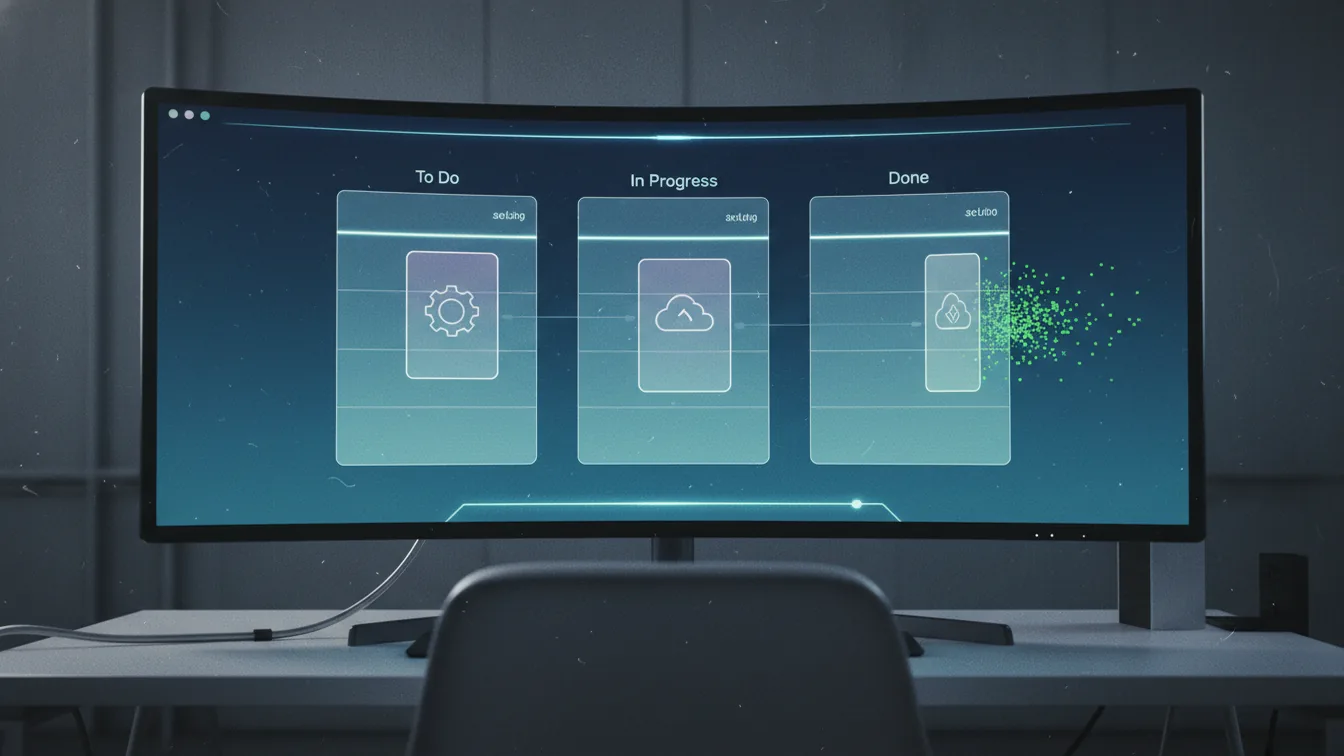
The analogy is Kanban, or Trello, or Linear. You create a task, assign it to an agent, and go do other work. When the agent finishes , the code, the PR, the output , it appears in the Done column. You review results when you have attention, not when the agent is ready for its next instruction.
The key architectural difference: the human's attention is applied to reviewing completed work, not to managing the flow of work between agents. Output review requires human judgment. Routing work between agents does not.
The Local Agent Advantage
One specific design choice in Multika: it bridges to local agents running on your machine rather than cloud-hosted agents. The reasoning is that your local agents have context , accumulated skills, memories, project-specific knowledge , that cloud agents do not have.
A local Hermes or Claude Code agent that has been working on your codebase for three months has a different context surface than a fresh cloud agent handed the same task. The Marta daemon (the bridge component) connects the Kanban board to those local agents so that the institutional memory they carry is available when the task arrives.
Why This Is an Architectural Principle, Not Just a Product
The specific tools here will evolve. But the underlying principle , reduce the percentage of human involvement in the routing loop , applies to any multi-agent system.
The most valuable human attention is judgment on outcomes. The least valuable is managing handoffs between agents that could manage handoffs themselves. Any architecture that respects this distinction will be more efficient than one that treats human attention as the coordination layer.
Most current multi-agent architectures treat it as the coordination layer. That is why most current multi-agent workflows feel like more work than just doing the tasks yourself.