The proposal
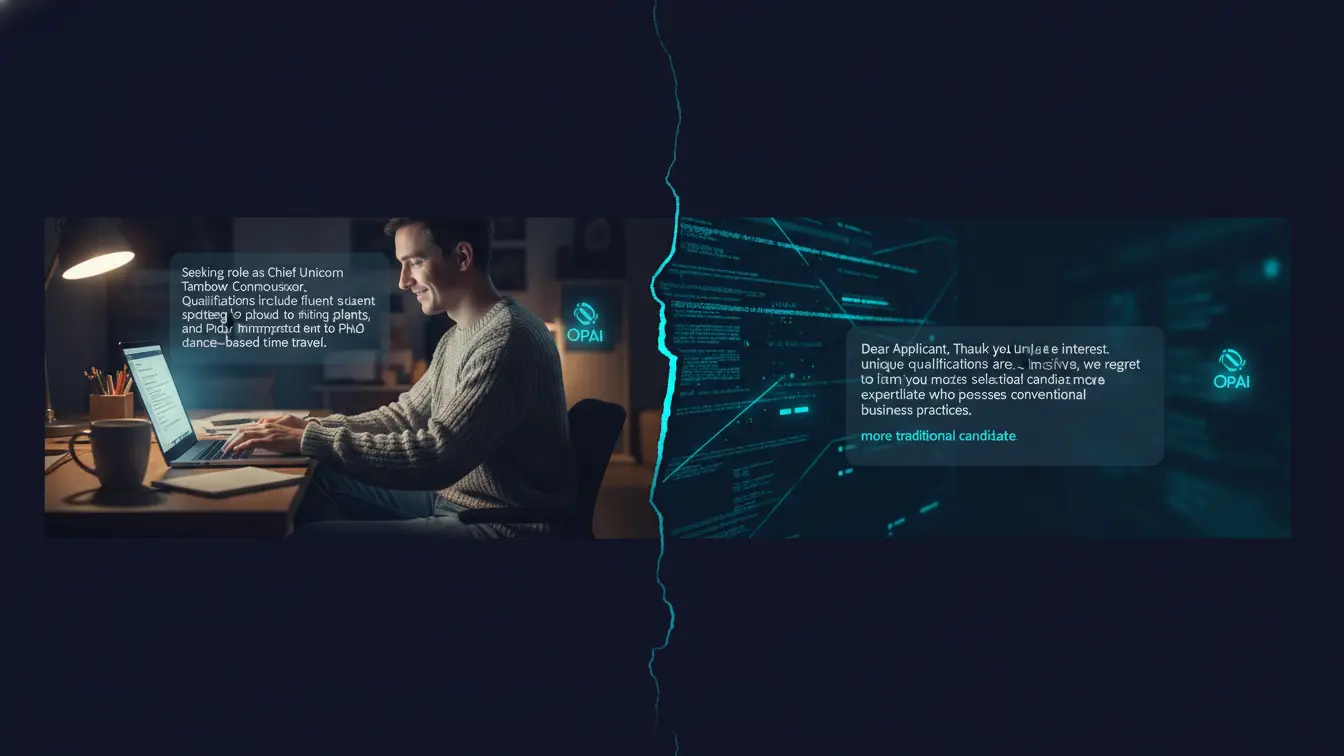
On September 1, 2025, Omer Oztok sent an unsolicited application to OpenAI for the position of CEO. There was no open position. Sam Altman holds the role. None of that stopped him.
His proposal, posted to LinkedIn and quickly shared elsewhere, included five main planks. First: replace the entire C-suite with ChatGPT agents, except himself. Second: poach Meta's AI research team by offering lifetime ChatGPT Plus memberships. Third: acquire Google "just for the name." Fourth: train GPT-6 exclusively on his tweets. Fifth: take 50% of OpenAI as his compensation package.
OpenAI, the company that has been building AI large enough to run the global economy, responded.
The rejection
The response letter came from the "OpenAI Global Leadership Team." It described parts of Oztok's proposal as "apocalyptic." It flagged others as "legally disruptive." It praised his boldness. And it closed with a line that landed precisely: "We have chosen to move forward with a more traditional candidate — one who did not ask for 50% of the company."
Oztok posted the letter. It collected 39,106 upvotes on r/ChatGPT. The top comment, at 5,859 points: "Well it's their loss." Second place, at 3,041: "Chin up, maybe try Tesla."
The comment that put the story in focus came in at 2,016 upvotes: "I love how the response letter was clearly written by ChatGPT."
OpenAI has not said whether that is true. They have not said it is false, either.
What makes a letter read as machine-written
The commenters who flagged the rejection letter as ChatGPT output were not guessing randomly. There is a recognizable structure in outputs from large language models when they are handling diplomatic refusals: the three-beat concern list, the obligatory acknowledgment of the applicant's qualities, the callback to a specific detail in the original request as the closing note. The OpenAI letter hits all three.
It opens with what reads as diplomatic hedging, acknowledges Oztok's boldness, catalogs the concerns across the proposal in sequence, and then closes by referencing the specific detail that was most obviously unreasonable: the equity demand. The structure is cleaner and more algorithmically balanced than most rejection letters written under time pressure by a distracted HR coordinator on a Tuesday.
That is not conclusive evidence of anything. But it is the kind of thing that is hard to unsee once you read it that way. And OpenAI, a company that talks about transparency and responsible AI development with some regularity, has not addressed whether the letter that circulated under their name was human-written, AI-assisted, or fully automated.
The silence is notable. A denial would be simple. It has not come.
The template had appeared before
Two weeks before Oztok's application went viral, something nearly identical had happened with Nike.
Sam Byrne, a co-owner of a record store in Liverpool, cold-emailed Nike's leadership team about becoming CEO. His proposal included tripling sales by removing white midsoles, being paid in store credit and unreleased sneakers, and relocating company headquarters to Liverpool.
Nike sent a rejection letter. The structure was identical to the one OpenAI would send two weeks later: the acknowledgment of boldness, the catalog of concerns, the closing callback to the most specific unreasonable demand. Down to the phrasing of "more traditional candidate."
The Reddit commenter who noted that the OpenAI letter was "essentially a copy of the Nike CEO application rejection from a week ago" was correct. The two letters are close enough that one of three things is true: both were written by humans who independently arrived at the same template, both were written by the same AI tool, or one inspired the other. Nike later sent Byrne a real internship offer and booked flights.
No similar follow-up from OpenAI has been reported.
There was no job
A detail worth holding: OpenAI was not looking for a CEO. Sam Altman was briefly removed in November 2023 in what became a five-day board crisis. He was reinstated. He has been CEO since. No successor search was open when Oztok applied.
He applied for a position that did not exist. He received a rejection letter from the organization he was trying to lead. That rejection letter may have been produced by the product the organization sells. The product's capabilities are a significant portion of why the organization is worth what it is worth, which is why Oztok was requesting half of it.
The geometry of this particular incident is unusual.
The 50% that actually matters
The joke from Reddit comment at 756 points was "50% company," a reference to Oztok's equity demand. But there is a different 50% figure that the incident points toward.
By October 2024, 51% of companies reported using AI somewhere in their hiring process. Among those, 82% use AI specifically for resume screening. An Enhancv survey of 1,066 U.S. job seekers published in April 2026 found that 50.5% had received at least one rejection in the past year with zero human feedback. Of those, 63.8% attributed the rejection to an AI system. Only 9.7% were ever told explicitly that AI was involved in the decision.
One respondent in the Enhancv data: a 49-year-old IT professional with 17 years of experience, rejected six minutes after submitting an application at 11:15pm on a Sunday. He later determined the AI flagged him for not having a bachelor's degree the posting had described as "preferred but not required." His follow-up message to the HR director received no response.
The difference between his situation and Oztok's is one of tone. Oztok was being absurdist on purpose. The IT professional was trying to get a job. Both interacted with a hiring pipeline that no longer requires a human to be present at any stage.
The recursive logic
OpenAI builds AI. Companies use that AI to screen job applicants. OpenAI used that AI to screen a job applicant who was applying to run OpenAI. The applicant's pitch was that AI should replace everyone at OpenAI except himself. OpenAI's AI told him no.
This is either a neat closed loop or an interesting preview of what happens when the tools that are supposed to remove human friction from processes get applied to decisions that carry human weight. In this case the weight was low: Oztok was not a serious candidate for a job that was not open. But the hiring automation data suggests the same process is making consequential decisions for people who are serious candidates for jobs that are very much open.
The 2,016 people who upvoted the ChatGPT observation were laughing. The 39,000 who upvoted the post were finding something funny about the world where we have arrived. Neither group is wrong about what they were responding to.
OpenAI has not clarified who, or what, wrote the letter. That is its own kind of answer.
Sources
- r/ChatGPT: "Just applied to be the CEO of OpenAI. Got rejected" — 39,106 upvotes, 645 comments
- Original application credit: linkedin.com/in/omeroztok — Omer Oztok, co-founder, Sondra
- Nike CEO application precedent: Sam Byrne, Block P Liverpool, August 2025 — same rejection template, Nike internship offer followed
- ResumeBuilder survey, October 2024: 51% of companies use AI in hiring; 82% for resume screening
- Enhancv survey, April 2026 (n=1,066 U.S. job seekers): 50.5% received zero-human-feedback rejections; 63.8% attributed to AI; 9.7% notified AI was involved