The Arithmetic Problem
Sam Altman is pushing for an OpenAI IPO by September at a $1 trillion valuation. Ed Zitron , who has been calling the AI bubble since almost nobody else would , walked through exactly why the math is impossible.
This is not bearish speculation. It is arithmetic.
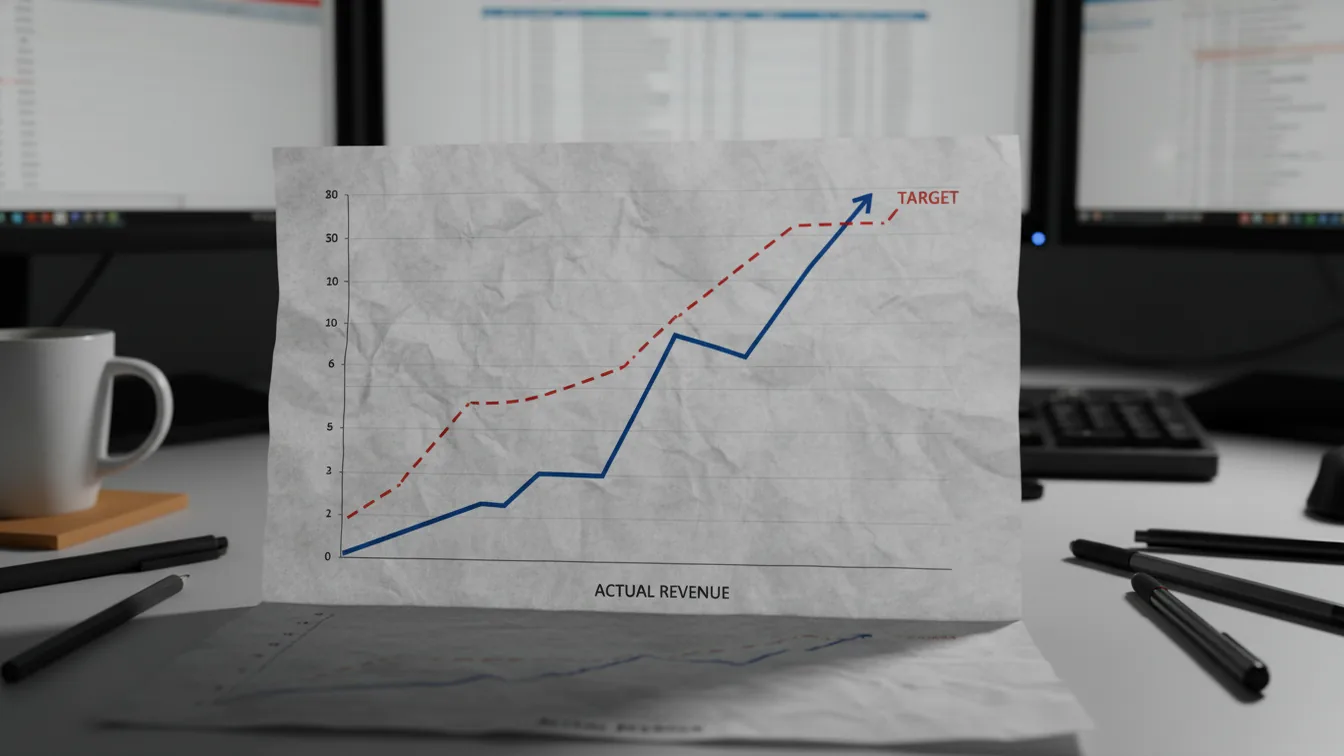
The total revenue of all software globally is roughly $700 to $800 billion per year. For the AI boom to justify current valuations, the hyperscalers collectively need to create approximately $600 billion in brand-new AI revenue , a category that did not exist before, at scale that has no modern precedent in enterprise software.
Google alone needs another Google Search. Microsoft needs two new Azure divisions. Amazon needs a new AWS. None of those gaps are close to being filled.
Microsoft's Numbers
Microsoft's AI is running at a $37 billion annualised run rate , with all of OpenAI's compute, all of Microsoft 365 Copilot, and all of GitHub Copilot subscribers, most of whom are heavily subsidised. That's $37 billion. Their target is approximately $140 billion. The gap is $103 billion of revenue that does not exist.
That number , the gap between where they are and where the valuation requires them to be , is not a projection or an estimate. It is the observable difference between a reported figure and the math of the investment thesis.
"Even if you're bullish on AI, the numbers are not there. They would have to double, triple their businesses. There are no signs it's happening." That is not an activist short. That is the FT's managing director of an investment bank writing the same analysis.
The GPU Problem Nobody Says Out Loud
Even in the optimistic scenario , AI delivers on every projection, growth continues , the A100 GPUs driving current AI infrastructure will not have paid for themselves by the time Blackwell replaces them. Blackwell will not pay for itself before Vera Rubin replaces it.
The hardware replacement cycle is faster than the revenue recovery cycle. You are always one generation behind on ROI. The infrastructure investment never achieves the payback window the model assumes.
Why September
OpenAI filed for IPO confidentially , meaning no full financial disclosure until significantly later. The target is September 2026, immediately after the Elon Musk lawsuit over the for-profit conversion was cleared.
The sequencing is the tell. You file confidentially when you want to control the narrative until you are ready to go public. You target September when private rounds can no longer cover the compute spend. You move the moment the legal path is clear because every quarter of delay costs you runway and gives Anthropic more time to close the narrative gap.
The internet was a bubble in 2000. Transformative technology always gets overhyped first, crashes, then stays. The crash does not invalidate the technology. It does arrive.
The question is not whether AI will be real and valuable in 15 years. The question is what the $1 trillion valuation implies about the next 3 years , and whether those implications are supported by the arithmetic.
They are not.