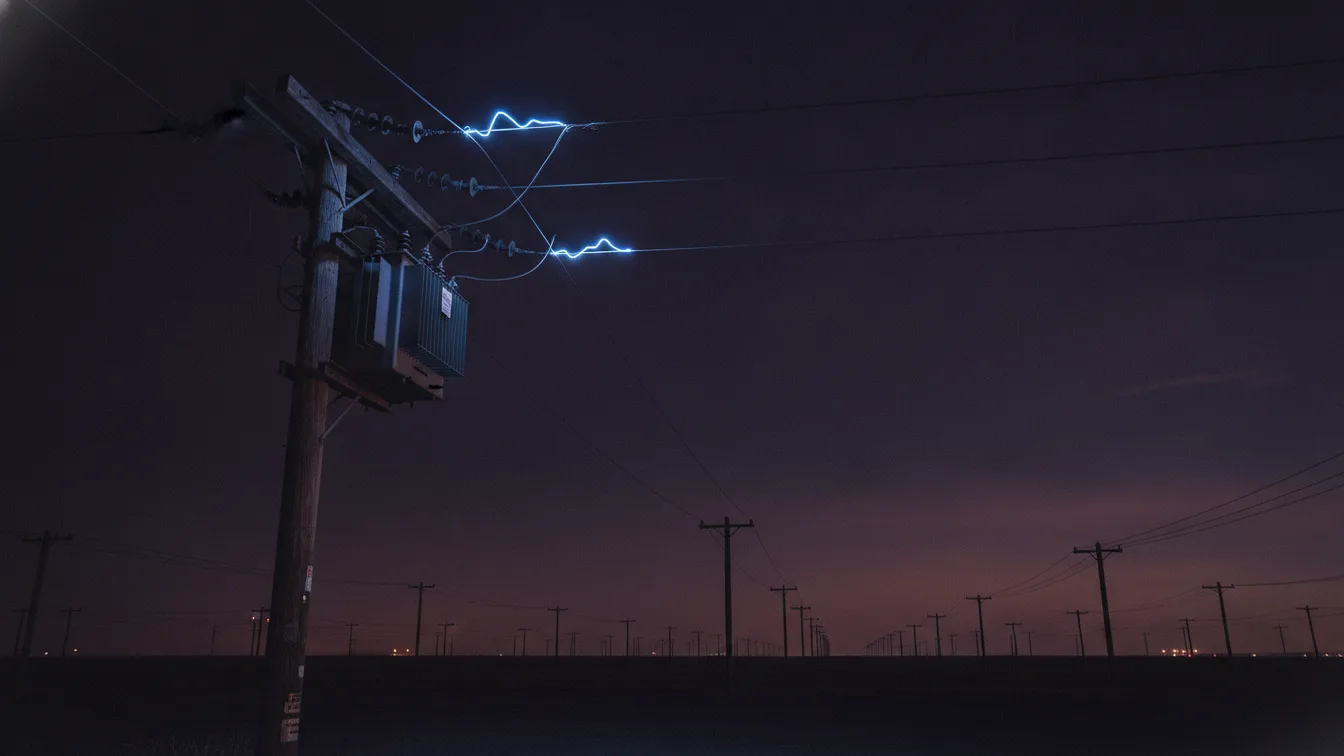
The Analogy That Matters
Satya Nadella's analogy at Microsoft Build 2026 was to electricity. You don't think about kilowatts when you turn on a light. You don't ration power across your morning based on what you can afford to spend. Electricity runs. You use it. The cost is abstracted into a monthly bill you pay without much thought.
His argument is that AI should work the same way. Not a tool you consciously invoke. Not a decision you make each time. A constant in the background, running across every application and workflow, ambient the way electricity is ambient in a modern building.
Jensen Huang made the same argument from the infrastructure layer. Compute should be abundant and cheap at the base level so that intelligence can be woven into every application without the builder having to think about whether running it is affordable. Two people with different jobs, arriving at the same conclusion from opposite ends of the stack.
What "Unmetered" Actually Implies
The word unmetered is doing specific work in this framing. Metered intelligence means you're counting tokens, watching API costs, deciding which queries are worth sending to the model and which aren't. You're making tradeoffs. Every API call is a small conscious decision.
Unmetered intelligence means you've stopped making those decisions. The AI runs on everything because the cost of running it on everything is no longer a concern worth managing. The mental overhead of rationing the model disappears.
The business model implication follows directly. Per-token API pricing is a metered model by design. It forces you to think about every call, every workflow, every query. Microsoft 365 Copilot, which charges a flat monthly fee and runs AI continuously across every product in the Microsoft suite, is the unmetered model in practice. You pay the subscription. The intelligence runs. You don't think about it call by call.
That's not a coincidence. Microsoft 365 Copilot is Satya's working proof of concept for the thing he described on stage. The product is the argument made concrete.
The Current Reality Check
We are not there yet. That needs to be said clearly and without softening.
GPU supply is constrained. Energy costs for running large models at scale are real and significant at the infrastructure level. Inference costs remain high enough that most builders are still making conscious tradeoffs about when to call the model and when to skip it. "Unmetered" describes a vision of where the trajectory leads, not a description of the market in 2026.
The cost curve is moving in the right direction. DeepSeek v4 running at roughly one-tenth the cost of Claude Sonnet for comparable outputs on many tasks is evidence of that movement. The trend toward cheaper inference is clear and consistent. But "cheaper" and "unmetered" are not the same thing, and confusing the trajectory for the destination is a mistake that costs money.
Builders who treat this framing as a description of today will design systems that are more expensive than they need to be and will be surprised by the bills. Builders who dismiss it as pure executive aspiration will underinvest in the architecture decisions that matter as costs continue to fall. The useful position: believe the direction of travel, stay realistic about how far along the road we currently are.
What It Changes for Product Design
If you take the unmetered framing seriously as a direction rather than a current state, it changes specific decisions you make when designing products today.
The current default for most AI features is a button. The user clicks something. The AI activates. The AI does a thing. The user sees the result and either accepts or dismisses it. That's a metered mental model expressed in a UI pattern. The user is consciously invoking the intelligence each time.
The unmetered model looks different at the product level. The AI is already watching. It surfaces relevant information before you ask for it. It updates documents as you work rather than waiting for you to request a revision. It flags issues as they arise rather than waiting for you to run a check. Microsoft 365 Copilot does versions of this now: it summarises meetings without being asked, suggests edits in context, tracks action items across your calendar and documents.
The product design question Satya's framing forces is: where are you making the user consciously invoke the AI, and where could it be running continuously? Those represent two different product architectures. One places the cognitive load on the user. One places it on the infrastructure. As infrastructure costs fall, the case for the second architecture gets stronger.
The Counterargument Satya Didn't Make
The "always on" model has a user experience problem that didn't come up on stage at Build. It's worth naming, because it will shape how products built on this model succeed or fail.
Some users actively want to meter their AI use. Not only because of cost, though that's a real motivation for many. Because ambient AI can be experienced as intrusive. An AI that is always watching, always processing, always surfacing information without being asked crosses into territory that many users experience as surveillance rather than service.
The electricity analogy breaks down precisely here. Electricity is passive. It doesn't make decisions about what you need. It doesn't surface information you didn't request. It doesn't misinterpret your behavior and act on that misinterpretation. AI running continuously in the background is not passive. It's constantly making judgments, and those judgments are sometimes wrong, sometimes unwanted, and sometimes experienced as an intrusion rather than help.
Products built on the unmetered model will need to solve this problem, not just the cost problem. The toggle between ambient AI and on-demand AI is not a settings edge case that a small percentage of power users will care about. For a meaningful share of users, it will be a core preference that shapes whether they keep using the product at all. Building ambient AI without giving users real control over its ambient-ness is a design mistake that will show up in churn data.
The Useful Frame for Builders
Here is what to take from this that's actually actionable right now. The direction of travel is toward AI as a background constant rather than a foreground tool you activate. Infrastructure costs are moving toward that model. Business model structures are moving toward that model. The flagship enterprise products from the biggest players in the market are already built on it.
If you're designing a product today, ask two questions. First: what would this product do differently if AI ran continuously rather than when the user invokes it? Second: which of those differences would users experience as genuinely valuable versus intrusive or unwanted?
The answers will be different for every product category. A writing tool where ambient AI surfaces suggestions as you draft is likely to be experienced as helpful. An ambient AI that reads your messages and proactively responds on your behalf is likely to go wrong in ways that damage trust. The line is different in different contexts, and the only way to find it is to test with real users in your specific context.
There's a version of this that runs the other direction, too. Some product categories are better served by making the AI more visible, not less. If your users are doing high-stakes work, making the AI's involvement explicit builds trust rather than eroding it. "The AI flagged this" is more trustworthy than "this appeared." The unmetered vision works better in low-stakes ambient assistance than in high-stakes professional judgment. Know which category your product sits in before you design the AI layer as invisible infrastructure.
The products that define the next few years will be the ones asking these questions now, building the toggle, and learning from early users where the line actually sits for their specific audience.
Satya's bet is that unmetered wins at the market level.
The smart move is to design for that world before it fully arrives.
The smarter move is to remember that your users will still want a switch.