The Person Who Built YC's Brain
Pete Kumman is a general partner at Y Combinator. He created Optimizely , one of the first major A/B testing platforms. Since then, he has built all of YC's internal agent infrastructure.
Not the advice YC gives to startups about AI. The actual systems YC uses internally to run its own operations.
His central lesson from that work: the companies getting the most from AI are not the ones using it as a copilot. They are the ones rebuilding their operations around it as the foundational layer.
The Copilot Trap
The default mental model for AI in most organisations: a smart assistant. You are doing the work. The AI helps when you ask.
Kumman's reframe: that model leaves most of the value on the table.
"Don't use AI as a copilot. This is the thing where you use it as the building layer for everything."
The difference in practice: a copilot responds to requests. A building layer is embedded in how work gets done. Every artifact, every decision, every process runs through a layer that AI can access, update, and act on. The AI is not a tool you reach for , it is the infrastructure the work runs on.
The Shared Organisational Brain
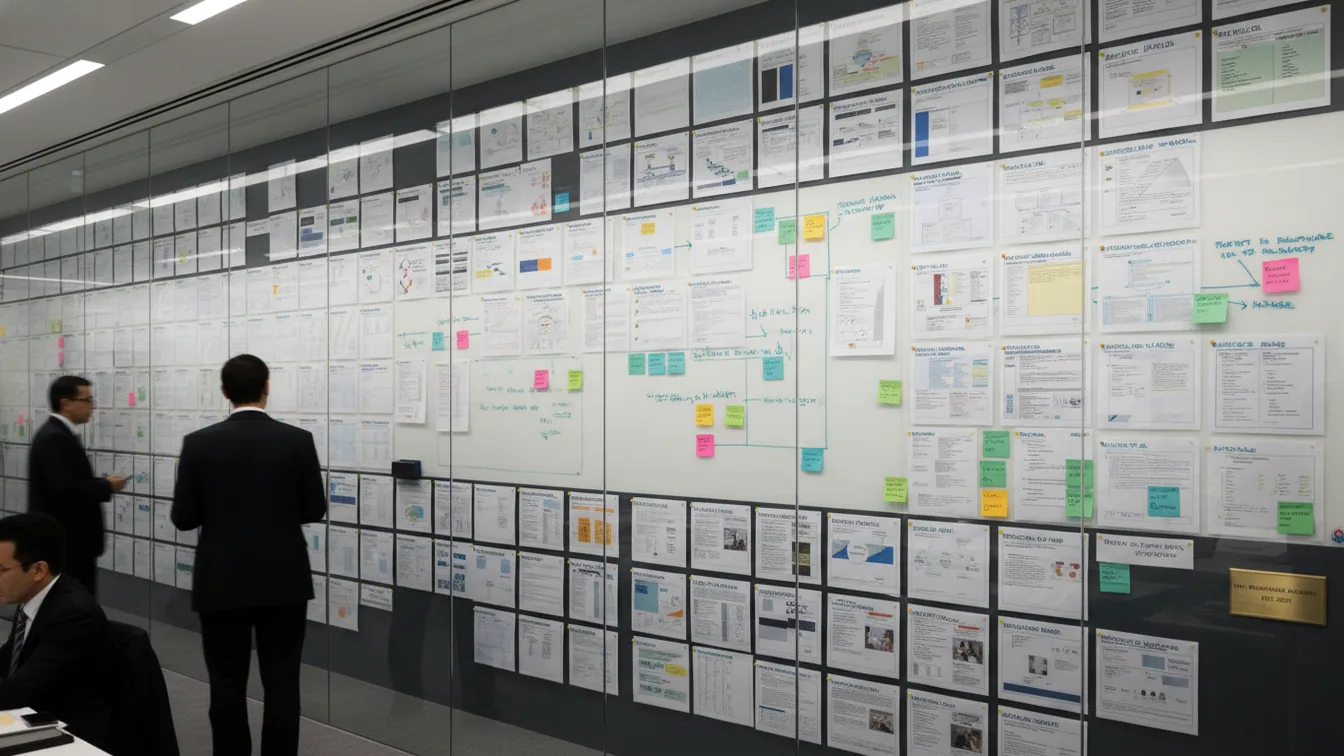
The mechanism that makes this work is recording everything. Every decision, every meeting, every process, every outcome , in a structured, searchable, AI-readable form.
"You need to start recording all the artifacts. It's like a shared organisational brain."
This sounds administrative. In practice, it changes what the organisation can do. An AI agent with access to five years of structured decisions, meeting transcripts, and outcome data can surface patterns, draft responses, and make recommendations that a human starting from scratch cannot match.
The analogy Kumman uses: "It's the closest thing to being able to connect our brains." The collective skill and instinct of everyone who has ever worked at the organisation, accessible at query time.
What YC Learned Advising AI Companies
YC has been primarily funding AI companies for several years now. The advice they give startups and the systems they build internally have evolved together , a feedback loop between what they see working in the market and what they test themselves.
The consistent finding: organisations that treat AI deployment as an IT project , install the tool, let employees opt in, measure adoption , get limited results. The organisations that treat it as a process redesign project , what would this function look like if we rebuilt it around AI as the layer everything runs on? , get different results.
"If you frame this as a way for everyone in an organisation to get better at what they do using the collective skill and instinct of the people they work with, it's incredibly powerful."
The insight behind that framing: the value of AI at an organisation scales with the quality of what has been recorded. Every conversation that goes unrecorded, every decision that was made verbally and never written down, every process that lives only in someone's head , these are gaps in the shared brain that limit what the AI layer can do.
Most organisations have large gaps. Building the brain is the work before the AI can use it.